Mitsubishi U4 Code in West Covina, CA - The Outdoor Thermistor Fault
Plain answer: A Mitsubishi U4 code in West Covina, CA (ZIPs 91790 to 91793) means an outdoor thermistor on the condenser reads open or shorted, so the inverter shuts down on a sensor protection fault rather than a compressor failure; call (213) 449-4344 or book online and we test the sensors first.
The overview
- U4 = an outdoor thermistor open or shorted - a U-code, so the fault is outside on the condenser.
- Components in play: outdoor coil, discharge, and ambient thermistors, the sensor harness, the inverter board.
- The unit is off by design; you have no cooling while U4 is active, but it is not a safety hazard.
- A thermistor or harness repair is low-cost; an outdoor control/inverter board runs $400-$2,000.
- Outdoor heat exposure in West Covina side yards is what cracks the thin sensor wiring.
- Independent shop; in-warranty units go to authorized service first.
What does a U4 code mean on a Mitsubishi system?
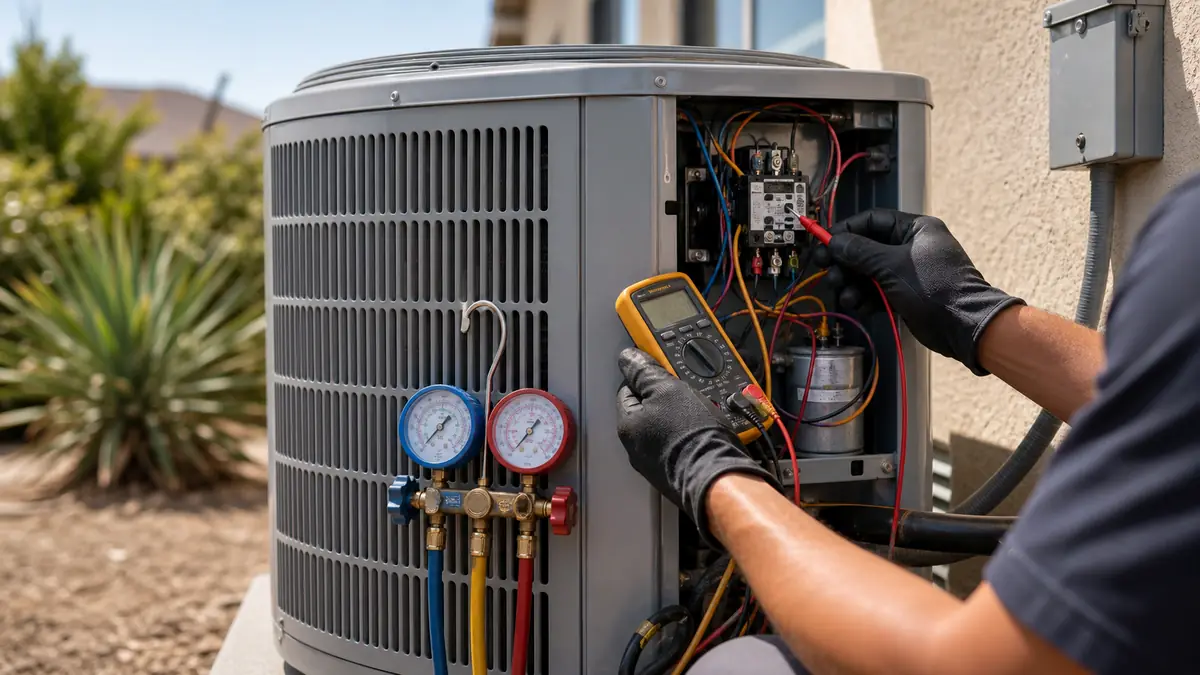
U4 is the inverter board reporting that one of its outdoor temperature sensors has gone electrically open or shorted. Mitsubishi outdoor units carry several thermistors - small two-wire resistance sensors that change ohms with temperature - clipped to the outdoor coil, strapped to the compressor discharge line, and reading ambient air. The board uses those readings to run the inverter compressor safely, manage defrost, and protect against extremes. When a sensor's resistance falls outside the range the board expects, or its harness loses continuity, the board can no longer trust that input and posts U4, then stops the system rather than running the compressor blind. Because U-codes are outdoor and inverter faults, everything about U4 lives in the condenser cabinet outside, not at the indoor head - which is why a tech who understands the letter goes straight to the outdoor unit.
Why does a U4 show up on West Covina condensers?
A West Covina condenser lives a hard outdoor life, and U4 is the code that life produces. The eastern San Gabriel Valley runs hot and dry well into fall, so an outdoor unit tucked beside a South Hills garage or in a Vincent side yard heat-soaks all afternoon, every afternoon. That relentless thermal cycling is exactly what fatigues the thin thermistor lead wires, the crimped connectors, and the solder joints where the sensor meets its harness - one of them eventually cracks open. Dust and grit work into the connectors, and it is not unheard of for a rodent to chew a sensor lead in a quiet outdoor cabinet. On older retrofits the harness routing is tight against hot copper, which bakes the insulation brittle. And sometimes the sensor element simply drifts out of its resistance spec after a decade of service. None of those are compressor failures - they are sensor and wiring failures, which is why U4 reads worse than it usually is.
How do you diagnose a U4 with instruments?
U4 is a meter job, and the readings make the call. First we pull the fault and freeze-frame data off the outdoor board's service connector, so we know which sensor circuit tripped and what the air temperature was when it did. Then we power down at the disconnect for safety and go to the multimeter. We measure each outdoor thermistor's resistance and compare it to Mitsubishi's resistance-versus-temperature table for the measured ambient - a 5-kilohm sensor reading open (infinite ohms) or near zero is the failed one, while one reading wildly off the curve is drifting. We wiggle-test the harness and connectors while watching the meter to catch an intermittent open that only shows under heat, the kind that comes and goes with a hot Galaxie afternoon. We inspect the leads for chafe, melt, or rodent damage along the run. Only if every sensor and its wiring check good against the table do we turn to the inverter or control board, because a board is the last suspect, not the first. That instrument order is what keeps a U4 from turning into an unnecessary board sale.
What can a homeowner safely do, and what needs a pro?
Your safe zone on a U4 is limited, because the fault is inside a 240-volt outdoor cabinet. You can do the no-tool checks: confirm the code on the remote or kumo app, make sure the outdoor unit is clear of leaves and debris and has breathing room, and check that the disconnect by the condenser has not been bumped off. You can note whether the code is constant or comes and goes with the heat of the day, which is genuinely useful for us. What you must leave to a pro: opening the outdoor cabinet, measuring thermistors, handling the harness, or anything inside the electrical panel - there is line voltage and a charged inverter in there. There is no homeowner refrigerant work on a U4 and no safe reset loop; if the code returns, the sensor or wiring is the cause. Our heat pump repair page covers the outdoor-unit visit, and the Mitsubishi error-code hub shows how U4 relates to its neighbor U-codes.
When is a U4 code urgent?
U4 is urgent by comfort, not by safety. The unit has already shut itself down, so there is no fire or flood risk the way a furnace or drain fault carries - but you have zero cooling while it is active, and during a West Covina heat run that turns a second-floor bedroom in Merlinda or Woodside Village into a problem fast. It climbs the priority list if the code is constant and the house is heat-loading, if a household member is heat-sensitive, or if the fault flickers in and out and is clearly getting more frequent each day. It can wait a little if cooler weather has the system idle anyway, though we would still book it before the next hot stretch. Resetting power buys you nothing here - a real sensor fault comes right back - so the move is a same-week diagnostic across any West Covina ZIP rather than a reset gamble.
West Covina Mitsubishi U4 questions
What is a U4 code on a Mitsubishi outdoor unit?
U4 means an outdoor thermistor reads open or shorted, so the inverter board has lost a temperature it needs and shuts the system down on protection. Thermistors are small resistance sensors clipped to the outdoor coil, the discharge line, and the ambient air; when one drifts out of range or its harness breaks, the board cannot trust its readings and stops. It is an electrical-sensor fault on the condenser, not usually a compressor failure.
Is a U4 code dangerous or can it wait?
U4 is rarely a safety hazard - the unit is already off because the board chose to protect itself - but it should not wait long during a West Covina heat stretch. You have no cooling while it is active, and a thermistor that is intermittently faulting can come and go with the afternoon heat, which makes a hot upstairs Galaxie bedroom worse each day it is ignored. It is not an emergency the way a gas or water fault is, but it is a same-week call.
Will I need a whole new outdoor unit for a U4?
Almost never. The most common U4 fix is a single thermistor or a repaired harness, which is a low-cost part, not a condenser replacement. The expensive end of U4 is the outdoor control or inverter board at roughly $400 to $2,000, and we only go there after the sensors and wiring test bad. Anyone quoting a new outdoor unit off a U4 alone has skipped the cheap diagnosis.
Why would a thermistor fail on a West Covina condenser?
Heat and exposure. A condenser in a South Hills or Vincent side yard bakes through long, dry San Gabriel Valley summers, and that heat-cycles the thin sensor wiring and connectors until a solder joint or a clip cracks. Dust and the occasional rodent in an outdoor cabinet finish the job on a harness. The sensor element itself can also simply drift out of spec with age. All of it is fixable at the sensor level far more often than at the board.